
Why Does ChatGPT Recommend My Competitor Instead of Me? (7 Reasons and the Fixes)
Short answer: ChatGPT appears to favour the businesses it finds the most consistent evidence for across the web, not necessarily the biggest or best one, so ChatGPT SEO is really about building that evidence. For local searches, that evidence comes mostly from third-party listings like Google Maps, Yelp and TripAdvisor, from reviews and from mentions on other websites. Your own site and your Google ranking appear to count for less, though both still matter. If a competitor is named and you aren't, they usually have more of that outside evidence: more mentions, stronger reviews on more sites, matching details everywhere, or listings you haven't claimed. Good ChatGPT SEO means building that evidence where ChatGPT looks.

It's one of the most frustrating things to see. You ask ChatGPT for the best plumber in your town, and it names a company a tenth your size, one with half your reviews, or one that ranks below you on Google. Owners post this exact complaint on Reddit every week, and some marketing agencies are getting the same question from their clients.
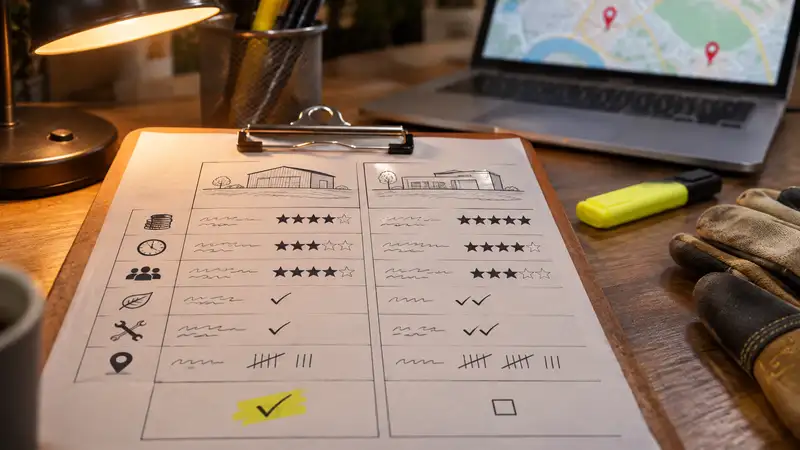
The good news: it usually isn't random, and it's usually fixable. This guide covers how ChatGPT picks businesses, the seven most common reasons it picks someone else, and the ChatGPT SEO fixes for each one. At the end there's a side-by-side worksheet you can fill in for you and your competitor.
First, check it's a pattern and not one bad answer
ChatGPT doesn't give the same answer twice. A January 2026 SparkToro study found less than a 1-in-100 chance it gives the same list of brands in any two answers to the same question. One answer that leaves you out proves nothing.
Before you change anything, run our free 15-minute AI visibility test: ask the same questions several times in a clean session and count how often each business is named. If your competitor shows up in most answers and you show up in few, you have a real gap to close.
How does ChatGPT decide which businesses to recommend?
OpenAI doesn't publish the formula. Its help page says only that ChatGPT ranks results "using multiple factors" and that placement is not guaranteed. It also says ChatGPT sometimes partners with other search providers, and may share your location with third parties that provide local information such as nearby business listings.
Independent research fills in some of the gaps:
- A 2026 Resoneo study of more than 1,200 ChatGPT answers found local business results came from third-party feeds, mainly Yelp, TripAdvisor and Google Maps, rather than businesses' own websites.
- A Yext study of 6.8 million AI citations for location-based questions found 42% came from listings and 44% from websites. Yext found OpenAI leaned on third-party listings more than the other assistants it studied.
- The SOCi Local Visibility Index, which looked at about 350,000 business locations, found ChatGPT recommended just 1.2% of them. The ones it did recommend averaged 4.3 stars.
In short, ChatGPT recommends few businesses, and these studies suggest it builds its picture of yours mostly from what other sites say. That's where the seven reasons come from.
The 7 reasons ChatGPT recommends your competitor
1. They're mentioned on more websites than you
When Ahrefs studied 75,000 brands, how often a brand was mentioned around the web tracked its visibility in Google's AI answers far more closely (0.664 correlation) than backlinks did (0.218), according to their analysis. In Whitespark's 2026 Local Search Ranking Factors, experts ranked appearing on "best of" lists as the number one factor for AI visibility.
The fix: get your business named on other reputable sites. Ask to be added to local "best of" lists and directories in your trade, join your industry association's member directory, get listed on your suppliers' "find a dealer" or "certified installer" pages, and pitch a local news story about a project or community sponsorship.
2. Their reviews are stronger, and on more sites
In Whitespark's survey, the authority of the sites your reviews are on, high Google ratings and having reviews on several different sites all ranked in the top dozen factors for AI visibility. SOCi's finding that recommended businesses averaged 4.3 stars points the same way. Nobody has published a magic review count, so ignore anyone who quotes one.
The fix: ask every happy customer for a review, every week, not in bursts. Focus on Google first, then add one or two others that matter in your trade, such as Yelp, HomeStars in Canada or Angi in the US. Ask customers to mention the job and the town ("replaced our furnace in Sylvan Lake") so the review describes what you actually do.
3. Their details match everywhere, and yours don't
SOCi found the business details ChatGPT gave were only about 68% accurate. If your old phone number is still on a directory, or your hours differ between Google and Yelp, ChatGPT gets mixed signals about you. A competitor with the same name, address, phone and hours everywhere looks more reliable.
The fix: search your business name with your old phone numbers and addresses to find outdated listings. Then make your name, address, phone, website, hours and services match on Google, Bing Places, Apple Business, Yelp, Facebook and your main trade directories.
4. They're on the listings ChatGPT reads, and you aren't
If ChatGPT's local results lean on Yelp, Google Maps and TripAdvisor, an unclaimed or empty Yelp listing may hold you back, even if you never think about Yelp. Bing Places feeds Bing search and Maps, which Microsoft Copilot searches, and Apple Business feeds Siri and Apple Maps, so the same logic applies to them.
The fix: claim and complete every major listing. Our guides cover Bing Places and Apple Business, and our Google Business Profile service handles Google. Add real photos, every service you offer and every town you serve.
5. Their website answers the question, and yours doesn't
Your website still matters, especially when an assistant searches the web for details. Whitespark's experts ranked having a dedicated page for each service as the second most important factor for AI visibility. A competitor with a page called "Water Heater Replacement in Airdrie" that says what they do, where, and roughly what it costs gives ChatGPT an easy answer. A homepage that lists twelve services in one paragraph doesn't.
The fix: give each main service its own page. Answer the question in the first two sentences, then cover the towns you serve, typical prices or price ranges, how fast you can come out and why customers choose you. Our guide to ChatGPT SEO for HVAC and plumbing companies has examples.
6. People talk about them on Reddit and in local groups
Reddit's share of AI citations swings a lot. A Semrush study found ChatGPT cited Reddit in close to 60% of answers in early August 2025, then about 10% by mid-September. For location searches like "plumber near me," Yext found forums made up only about 2% of citations. Reddit matters most for comparison and "who do you trust" questions.
The fix: don't spam Reddit, because it backfires fast. If customers recommend you in local subreddits or community groups, that's worth more than anything you post yourself. Be helpful when someone asks a genuine question in your trade, and say who you are.
7. They claimed their ChatGPT listing, and you didn't
OpenAI launched ChatGPT Business Hub in November 2026. OpenAI's setup guide is clear that claiming "doesn't guarantee increased visibility," so a claimed listing alone won't explain a big gap. But it does make sure ChatGPT has the right website, category and description for that business.
The fix: claim yours. Our ChatGPT Business Hub guide walks through it. For now, OpenAI says local businesses can only claim an existing US listing, so Canadian local businesses may see a waitlist.
Compare the evidence: a side-by-side worksheet
Pick the competitor ChatGPT names most often and fill this in. Every row where they win is a gap to close.
| Evidence | You | Competitor | Gap to close |
|---|---|---|---|
| Google rating and review count | |||
| Reviews on other sites (Yelp, HomeStars, Angi, Facebook) | |||
| Local "best of" lists they appear on | |||
| News, association and supplier sites that mention them | |||
| Yelp listing claimed and complete | |||
| Bing Places and Apple Business claimed | |||
| ChatGPT Business Hub claimed (US) | |||
| Name, address, phone and hours match everywhere | |||
| A separate page for each main service | |||
| Mentions on Reddit or local community groups |
Tip: the sources ChatGPT cites in its answers (click Sources under the answer) show you exactly which sites it used for your competitor. Start there.
What won't help your ChatGPT SEO
- Buying reviews or mentions. Fake reviews break Google's and Yelp's rules and can get your listings suspended, which makes everything worse.
- Paying for ads to influence answers. OpenAI says advertising doesn't influence ChatGPT's independent answers. Sponsored placements are labelled and kept separate.
- Anyone who guarantees a ChatGPT ranking. OpenAI says placement isn't guaranteed. Nobody outside OpenAI can promise it.
- Stuffing your website with "best plumber in [town]." It reads badly to customers and doesn't create the outside evidence ChatGPT relies on.
Can I pay to be recommended by ChatGPT?
Not in its regular answers. OpenAI says ads don't influence ChatGPT's independent recommendations. Sponsored placements exist, but they're labelled and shown separately from the answer.
I rank first on Google. Why doesn't ChatGPT recommend me?
Because ChatGPT doesn't simply copy Google's rankings. In an Ahrefs study, only about 8% of the pages ChatGPT cited ranked in Google's top 10 for the same question. Your Google ranking helps, but listings, reviews and mentions on other sites carry more weight for local recommendations.
How long does it take to show up in ChatGPT?
There's no official timeline. Fixing listings and details is the quickest win, though nobody outside OpenAI knows how often ChatGPT refreshes its sources. Building reviews and mentions on other sites takes months of steady work. Re-run the same test monthly so you can see the trend.
Want to know exactly why they're winning? Our competitor AI audit compares your business with the competitors ChatGPT, Gemini and Perplexity keep naming, row by row, and gives you a ranked list of the gaps to close first.
Book a competitor AI audit or see our Google Business Profile service.
Last updated November 28, 2026. OpenAI statements and study figures checked against the linked sources on November 28, 2026. Studies on AI recommendations show correlation, not proof of cause, and assistants change often. Search volumes from Google Ads data via DataForSEO.